How to Pick Your Signature Scent at a Candle Bar
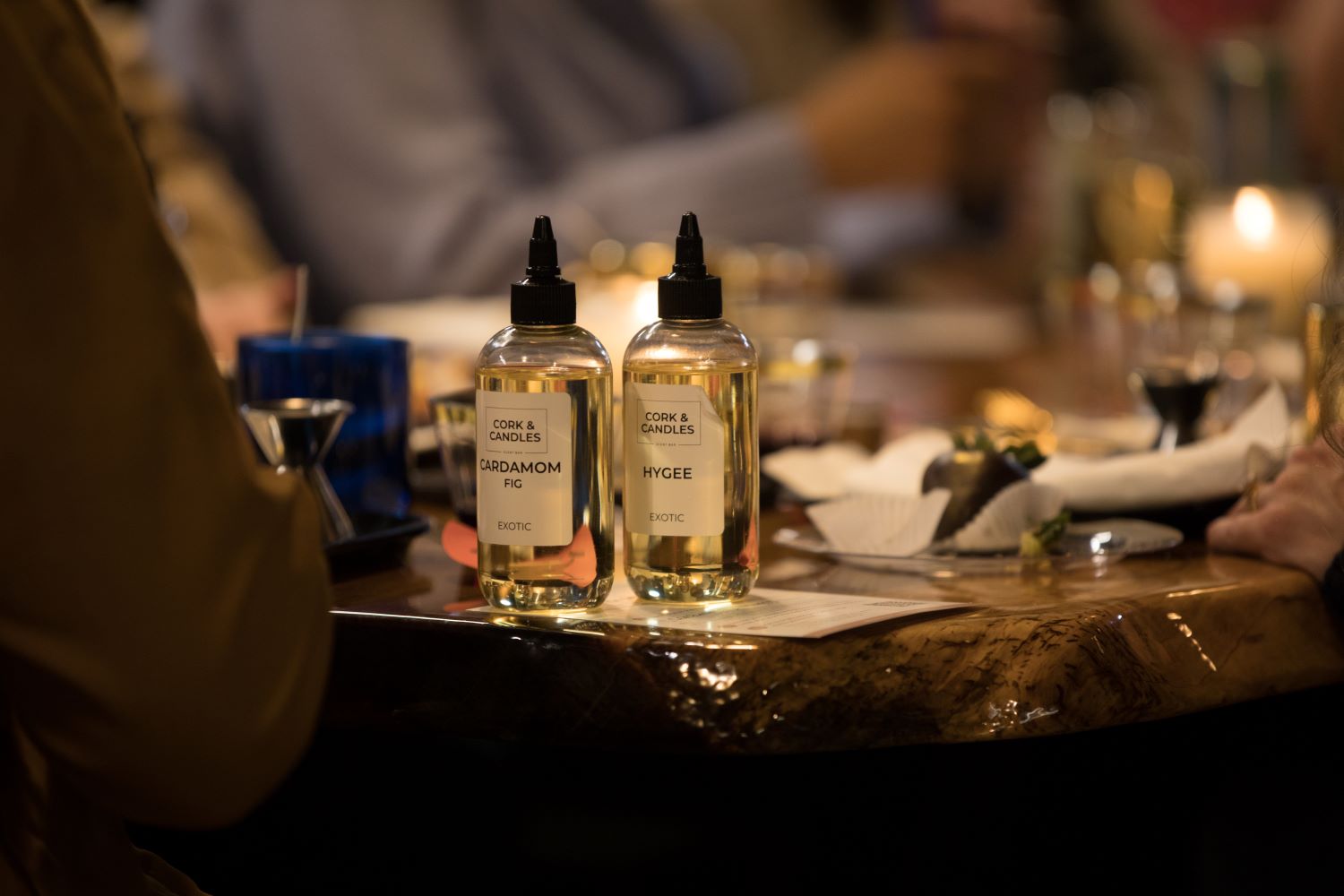
Walking into a scent bar for the first time, you're handed a menu of 60 fragrances and told to pick two. For your candle. That you're about to pour. In the next 90 minutes. If you've never done this before, that moment can feel less like creative freedom and more like a pop quiz you didn't study for. Which scents pair well? How do you know if something's too strong? What if you pick wrong and end up with a candle that smells like a headache?
Here's the truth: there's no wrong answer. But there are strategies that make the process easier, more fun, and more likely to result in a candle you'll actually burn down to the bottom of the jar. Whether you're coming to King of Prussia, Center City Philadelphia, or Ardmore, the Scent Library works the same way, and a few insider tips go a long way.
Start with what you already know you love
The fastest way to narrow 60 options is to ask yourself what you already reach for. Do you light vanilla candles at home? Wear a perfume with citrus notes? Love the smell of fresh laundry, or pine trees, or coffee? Your everyday scent preferences are the best starting point, not because you're locked into them, but because they give you a baseline.
At Cork & Candles, the Scent Library is organized into five families: Signature, Earthy, Fresh & Floral, Sweet & Fruity, and Exotic. If you know you love warm, cozy scents, start in Earthy or the fall/winter Signature scents. If you're drawn to clean, bright notes, head to Fresh & Floral. The categories aren't rigid, they're just scaffolding to keep you from smelling all 60 at random and losing your nose halfway through.
Your Chandler (the trained candle maker at your table) will walk you through the families and can point you toward specific scents based on what you describe. "I want something that smells like a spa" gets you Eucalyptus or Lavender Lemongrass. "I want my house to smell like Christmas morning" might land you at Peppermint, Hot Cocoa, or Gingerbread Spice. Start with the vibe you want, and the scents follow.
Sample before you commit
This isn't a restaurant where you order blind. Every fragrance in the Scent Library is available to smell before you pick. Take your time. Smell a few, step away, come back. Your nose will fatigue if you smell too many back-to-back, and by scent fifteen everything starts to blur together.
A trick: smell your own skin or shirt sleeve between fragrances. It resets your palate. Coffee beans work too, but your Chandler won't hand you a bowl of espresso at the table. Your wrist is easier.
When you find a scent you like, don't immediately commit. Smell it twice. The first impression is usually right, but not always. Some fragrances are louder on the initial sniff and then settle. Others are subtle at first and build. Give yourself a second pass before you decide.
Think in pairs, not solos
You're blending two fragrances per candle. That's the format. Not one, not three. Two. Which means the real question isn't "what's my favorite scent," it's "what two scents work together."
The easiest pairings are complementary: two scents from the same family that amplify each other. Lavender Thyme and Eucalyptus both live in Fresh & Floral and layer beautifully. Bourbon Vanilla and Sandalwood are both Earthy and warm. Strawberry and Vanilla are Sweet & Fruity comfort food. If you stay within a family, you're almost guaranteed a cohesive result.
The more adventurous route is contrast: pulling from two different families to create something unexpected. Rose Bubbly (Signature) with Cool Citrus Basil (Fresh & Floral) gives you floral with a sharp, clean edge. Espresso Latte (Signature) with Sensual Amber (Earthy) smells like a coffee shop with leather armchairs. Pina Colada (Signature) with Succulent Agave & Oakmoss (Fresh & Floral) is tropical but grounded.
Your Chandler can guide you here. They've seen hundreds of blends and know what works, what's surprising, and what's a hard pass. If you're torn between two directions, ask. That's what they're there for.
Consider where you'll actually burn this candle
A candle you make at a scent bar isn't a hypothetical. It's going to sit on your coffee table, your nightstand, or your bathroom counter, and it's going to fill that room with whatever you picked. Think about the space.
If it's for your bedroom, you probably want something calming. Lavender Lemongrass, Jasmine, or Bamboo Garden. If it's for the kitchen or dining room, food-adjacent scents like Apple Cider, Gingerbread Spice, or Pumpkin Pecan Waffles make sense. If it's for a bathroom or entryway where you want something fresh and clean, Lemon, Sea Salt and Cotton Lily, or Eucalyptus do the job.
Also: think about who else lives in your house. If your partner hates floral scents, don't make a candle that's 100% Plumeria and Jasmine unless it's going in a room that's just yours. Shared spaces benefit from scents that feel neutral-appealing, things like Crisp Champagne, Vanilla, or Sandalwood.
Don't overthink the "signature" part
The phrase "signature scent" implies permanence, like you're choosing the one fragrance that will define you forever. That's not what this is. You're making a candle. One candle. In 90 minutes. You can make a completely different blend the next time you come back.
The Scent Library has 60 options, which means there are hundreds of possible two-scent combinations. You're not locked in. If you make a Peppermint and Hot Cocoa candle in December and love it, great. Make it again. If you try Mango & Papaya with Coconut & Chamomile in July and it's fine but not your favorite, try something else next session.
Guests get a scent-tracking card where they write down which two fragrances they chose. Keep it. Bring it back. Use it to remember what you loved, or to remind yourself what you want to try differently. The fun is in experimenting, not in nailing the perfect blend on the first pour.
Trust your instinct over the trend
You'll see certain scents pop up more often than others. Espresso Latte is hugely popular year-round. Pumpkin Spice sells out every fall. Rose Bubbly is a bestseller. That doesn't mean those scents are right for you.
If everyone at your table is blending fruity, tropical combinations and you want something woodsy and dark, make the woodsy candle. If the seasonal scents don't speak to you, pull from a different category. The goal is a candle you'll actually use, not one that matches the group or fits the season.
Your signature scent is whatever makes you want to light the candle again after it cures for seven days. That's it.
Ready to find yours? Book your session and see what 60 fragrances can do when you pick the right two.